If you will it, it is no dream
אם תרצו, אין זו אגדה

Prep Curriculum

We are proud to offer a rich and engaging curriculum, with learning carefully personalised to each pupil. This enables every child to fulfil their potential and take pride in their progress. Kerem pupils consistently make exceptional progress against local and national benchmarks and approach predominately their learning with focus, joy and confidence, delighting in celebrating one another’s achievements as much as their own.

Pupils receive specialist teaching in Ivrit, Jewish studies, Music, PE and Forest School as well as frequent on-site workshops in Drama and Dance, trips to museums, theatre, concerts and historical buildings, as well as residential trips for pupils in years 5 and 6.

Curriculum Subjects

Ivrit

Ivrit

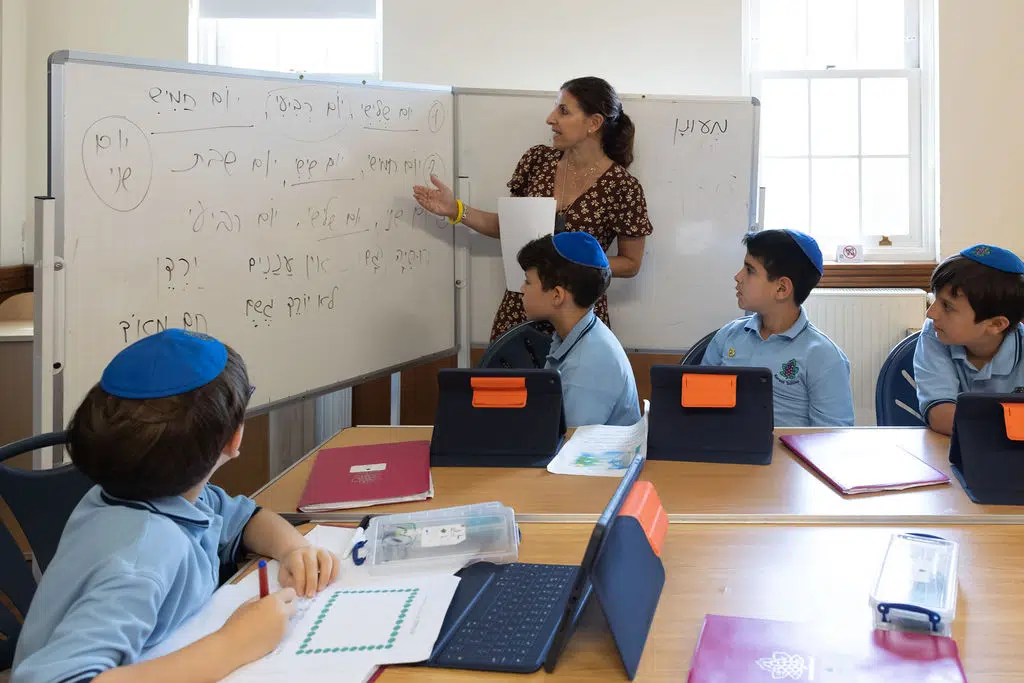
At Kerem, Ivrit is taught throughout the school, starting in the early years. Our Ivrit curriculum focuses first and foremost on developing a love of the language and of Israel. Its aim is to teach conversational Ivrit by using the language in everyday situations, so that it can be used confidently beyond the classroom.

In both the EYU and KS1, children follow an oral programme called Chalav U Dvash, alongside the online interactive Jigzi programme Ivrit M’Svi La’Olam. This programme is taught entirely in Ivrit, with content drawn from children’s everyday lives so it will become part of their active vocabulary. Children learn in a fun and interactive way through song, drama, dance and games, supported by a wide range of hands-on resources such as puppets, toys, flashcards, food items and dressing-up clothes.

In Key Stage 2, children follow the Ivrit B Click programme, an online resource developed by MATACH (The Technological Centre for Education in Israel). It includes graduated study units covering a range of everyday topics such as greetings, family, daily routines, birthdays, school subjects, shopping, clothes and food. Each unit is centred around a short video clip depicting a real-life situation, followed by interactive activities, games, worksheets, flashcards and other materials accessible via iPad and computer. The programme supports gradual progression across all language skills—speaking, listening, reading comprehension and purposeful writing—with grammatical concepts integrated naturally within the content. Real-life experiences are brought into the classroom through activities such as restaurants, markets, fashion shows, treasure hunts and picnics.

Ivrit native speakers follow a separate programme of study based on the Israeli school curriculum. They have their own learning targets and are assessed accordingly.

P.E.

P.E.

Sport and physical education form an essential part of school life, and all pupils have regular opportunities to take part in a wide range of activities. Pupils enjoy learning and playing sports such as football, netball, tennis, tag rugby, hockey, cricket and athletics, while developing teamwork, resilience and sportsmanship.

Classes have twice-weekly PE lessons taught by a specialist PE coach, enabling pupils to build key physical skills including balance, coordination, strength and agility in a supportive and motivating environment.  In Years 5 and 6, pupils attend a local gym for one term, where they are introduced to a broad range of physical education and gymnastics skills, encouraging strength, flexibility and body awareness.

Beyond curriculum lessons, Kerem offers a vibrant programme of school-wide sporting events, including cross-country competitions and our annual Sports Day. The school also participates in a wide range of inter-school competitions, giving pupils opportunities to challenge themselves, celebrate success and experience the enjoyment of sport as part of a team.

Geography

Geography

At Kerem, our geography curriculum inspires curiosity about the world and a deep understanding of both human and physical environments. Pupils explore diverse localities, including our own Hampstead Garden Suburb, developing a strong sense of place, identity and heritage.

Through geography topics such as rivers, rainforests and the Earth, children explore important global issues including climate change and deforestation. They use map work, comparisons and real-life case studies, to develop their understanding of their role as global citizens.  Through this, they learn what makes our local area unique and why caring for our planet is essential for building a sustainable future.

History

History

At Kerem, the history curriculum provides children with a broad and balanced understanding of the past, helping them to develop a sense of chronology and an appreciation of historical change.

Through the study of a range of historical events, periods and people, pupils learn about the diverse cultures and societies that have shaped the world. We foster curiosity by encouraging children to ask questions, make connections and explore different interpretations of the past. Our curriculum also supports pupils in developing a sense of identity and understanding their own history, as well as the interconnected nature of global history.

Art

Art

Art plays a vital role in life at Kerem School. Through creativity, children are encouraged to explore ideas, express emotions and develop confidence in their own unique voices. From their very first marks in nursery to more refined techniques in Year 6, every child is given the opportunity to experience the joy and value of artistic expression.

Our art curriculum is carefully designed to inspire curiosity and creativity while developing key skills such as drawing, painting, sculpture, printing, sewing and mixed media. Children are introduced to a wide range of artists, craftspeople and designers from different cultures and time periods, helping them to understand how art reflects the world around us. They are encouraged to ask questions, experiment with materials and take creative risks in a supportive and inclusive environment.

Art lessons are hands-on and exploratory. Pupils learn that there is no single “right” answer in art and that mistakes can lead to exciting discoveries. Sketchbooks are used as places to practise, plan and reflect, allowing children to see their own progress over time. We place a strong emphasis on developing observational skills, creativity and perseverance, helping pupils to grow both as artists and as learners.

Art is not confined to the classroom. Creative work is celebrated throughout the school, with displays that showcase a wide variety of styles, techniques and ideas. These displays help to build pride in children’s achievements and show that every piece of artwork is valued. Cross-curricular links allow art to enhance learning in other subjects, from illustrating stories in English to exploring pattern and symmetry in maths or responding creatively to themes in history and geography.

Above all, we believe art should be enjoyable, meaningful and accessible to all. By nurturing creativity and imagination, we aim to inspire a lifelong appreciation of art and give children the confidence to express themselves creatively, both now and in the future.

Design and Technology

Design and Technology

Design and Technology at Kerem School is an exciting and practical subject that encourages children to think creatively, solve problems and develop essential life skills. Through DT, pupils learn how ideas are turned into real products, gaining an understanding of how design shapes the world around them.

Our school is proud to have a dedicated STEAM lab, where children can explore a wide range of activities including cooking, woodworking, textiles, electronics and more. This purpose-built space allows pupils to experiment with tools, materials and techniques in a safe and inspiring environment, bringing their ideas to life in ways that go beyond the classroom. In the STEAM lab, pupils learn about healthy eating, where food comes from, and how to prepare simple dishes safely and hygienically, alongside developing practical skills such as measuring, cutting, joining and assembling.

The DT curriculum gives children opportunities to design, make and evaluate products that respond to real-life needs and purposes. From early experiences with simple structures in Key Stage 1 to more complex projects in Key Stage 2, pupils build skills progressively as they move through the school. Lessons emphasise the design process: researching existing products, generating ideas, creating plans, selecting appropriate tools and materials, and evaluating finished work.

Problem-solving is at the heart of DT. Pupils are encouraged to think independently, test ideas and adapt their designs when challenges arise. Collaboration is also an important feature, as children work together to share ideas, offer feedback and support one another. These experiences help build resilience, teamwork and confidence.

DT is closely linked with other areas of learning, including science, mathematics and computing. Cross-curricular connections help children understand how knowledge and skills work together in meaningful ways. Finished projects are celebrated and displayed around school, reinforcing a sense of achievement and pride in their work.

Through Design and Technology, and the opportunities offered by our STEAM lab, we aim to inspire creativity, curiosity and innovation, equipping children with the skills and confidence to become thoughtful designers and problem-solvers in an ever-changing world.
Computing

Computing

At Kerem School, our computing curriculum equips children with the knowledge, skills and confidence to thrive in an increasingly digital world. From Reception to Year 6, pupils develop both technical understanding and creative capability, learning not only how technology works, but how to use it thoughtfully and responsibly.

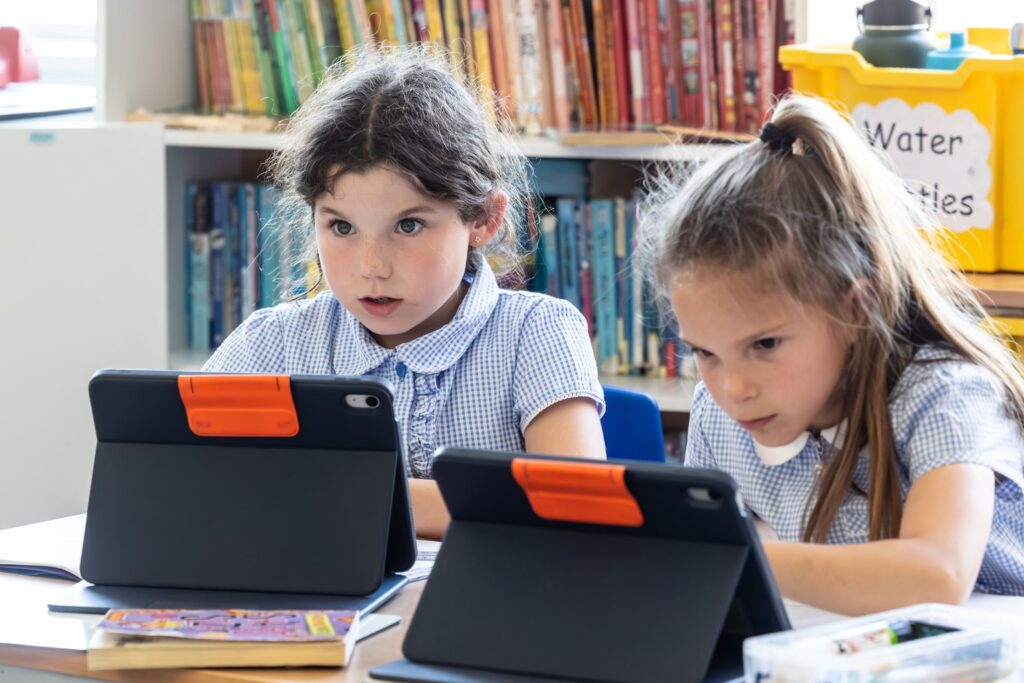
Pupils develop hands-on experience through regular use of a wide range of technology, including iPads, a variety of floor robots and a 3D printer. As they progress through the school, children deepen their understanding of algorithms, coding and computational thinking.

By Year 6, pupils are designing animations, exploring digital design tools such as Canva and developing increasingly sophisticated coding projects, as well as applying their skills to create games and take part in national computing and coding competitions.

Alongside programming, pupils build strong digital literacy skills. They learn word processing, desktop publishing, graphical modelling and animation, as well as touch typing and basic hardware skills. E-safety is a key focus at Kerem School and is embedded throughout our computing lessons across the year, ensuring that all pupils understand how to use technology responsibly and stay safe online.

English

English

At Kerem School, our English curriculum fosters a genuine love of language and literature while equipping pupils with the essential skills to communicate clearly, think critically and express themselves with confidence. We believe that strong literacy opens doors — academically, socially and creatively.

Reading begins with a secure foundation in phonics. We use the Essential Letters and Sounds programme to ensure that all children learn to read fluently and with increasing automaticity. As pupils move through the school, reading is developed through guided reading, whole-class text studies and rich discussion. Our carefully sequenced curriculum exposes children to a wide range of genres, authors and text types — from traditional tales and adventure stories to mystery, science fiction and poetry. Through this breadth, pupils develop both a love of reading for pleasure and the analytical skills needed for deeper literary understanding.

Writing is taught across fiction, non-fiction and poetry, with clear progression from Year 1 to Year 6. Children learn to write in a variety of forms including reports, biographies, persuasive letters, discussion texts and narratives of increasing complexity. Alongside this, poetry holds a special place within our curriculum, with pupils exploring different poetic forms and studying a range of poets each year.

We place strong emphasis on vocabulary development, grammar and accurate transcription, ensuring children can write clearly, imaginatively and precisely. Pupils are encouraged to experiment with literary devices, adapt their tone for different audiences and begin to develop their own unique voice.

Above all, we nurture a culture where children take pride in their work, speak thoughtfully, listen carefully and recognise the power of words to inform, inspire and connect.

Phonics

Phonics

Phonics: Kerem Early Years and Key Stage 1

At Kerem School, we use the Essential Letters and Sounds (ELS) programme to teach phonics and early reading. This structured, systematic approach ensures clear progression in the teaching of sounds, blending and tricky words, helping children embed their learning securely in long-term memory. Our aim is simple: every child becomes a confident, fluent reader.

Phonics teaching begins in Reception and continues daily through to Year 2. Lessons are carefully sequenced so that children learn to recognise sounds, blend to read and segment to spell with increasing confidence.

Reading Books

In Reception to Year 2, children take home books carefully matched to their phonics knowledge. These include:

  • Decodable books – containing only the sounds children have been taught
  • ELS e-books – accessed via Oxford Owl
  • Shared reading books – where adults support with less familiar words

In Reception, children begin with picture books or simple word books, depending on readiness to blend (“sound talk”). Books are changed once or twice a week. Each week, 

Phonics: Key Stage 2 (Years 3–6)

By the end of Year 2, most children have completed the main phonics programme. From Year 3 onwards, pupils move towards becoming Free Readers, selecting books independently once they have secured sufficient decoding fluency.

Reading books become longer and more complex, and change dates vary according to the text. Teachers communicate clearly with parents about expectations in each year group.

Where needed, targeted phonics support continues to ensure every child develops secure reading foundations.

Mathematics

Mathematics

At Kerem School, we provide all pupils with equal access to rich mathematical learning experiences, allowing pupils to develop ‘Maths Confidence’ and a positive and inquisitive attitude towards mathematics that will stay with them as they learn and grow.

One of our core values is to ensure that pupils acquire a deep and secure conceptual understanding of number as the firm foundation for developing fluency. Pupils are then able to apply their knowledge and understanding in a range of contexts and make links with the wider world.

Pupils are encouraged to work both independently and collaboratively to solve problems, building skills of resilience including breaking down problems into a series of simpler steps and persevering in seeking solutions.

In each and every year group, lessons allow pupils to build reasoning skills and draw upon a repertoire of mathematical vocabulary to support, justify or prove their argument

Parents can support their children on their mathematical journey by highlighting the many ways that maths surrounds us, and keeping maths fun and exciting through games, toys and puzzles. Including them in activities such as baking, shopping and paying for items using real money, and even reading a map can help reinforce the valuable skills learned at school.

Music

Music

At Kerem School, music is woven into the fabric of daily life. From singing Tefillah each morning to performing in end-of-term productions, children experience music as something living, joyful and shared. Regular opportunities to attend musical and theatrical performances further nurture appreciation, curiosity and the confidence to perform.

Our curriculum develops pupils’ ability to listen, perform, compose and appraise music with growing skill and understanding. In the early years, children explore sound through singing, rhythm, movement and percussion, learning to control pitch, dynamics and tempo. As they progress through the school, pupils develop increasing vocal fluency, singing in tune with expression and performing both individually and as part of an ensemble.

Instrumental learning forms an important part of musical development. Pupils learn to play tuned and untuned percussion and, as they move into the upper years, take part in structured instrumental programmes, ensemble work and improvisation. They begin composing using a small number of notes and gradually build towards more complex melodic, rhythmic and harmonic structures. Older pupils use musical technology, including GarageBand, to create, refine and record their own compositions.

Listening and appraisal are embedded throughout. Children learn to recognise and use musical vocabulary confidently, exploring how pulse, rhythm, melody, harmony and texture work together. They also develop an understanding of music from different cultures and historical periods, recognising how music reflects its social and cultural context.

Above all, we aim to nurture confident, expressive and thoughtful musicians who enjoy making music together and understand its power to communicate, inspire and bring people together.

Science

Science

At Kerem School, science is lively, hands-on and full of discovery. We want children to be curious about the world around them and confident in asking questions about how and why things happen. Through engaging lessons and practical investigation, pupils develop both a love of science and a secure understanding of scientific knowledge.

A strong emphasis is placed on working scientifically. From the early years, children learn to observe closely, notice patterns and talk about what they see. As they move through the school, they plan enquiries, carry out comparative and fair tests, control variables and select appropriate equipment independently. They learn to measure accurately, record findings clearly using tables, diagrams and graphs, and interpret data with increasing precision.

Discussion is central to our approach. Pupils are encouraged to hypothesise, explain their thinking and use scientific vocabulary confidently. They learn to draw conclusions based on evidence, make predictions and reflect on how investigations could be improved. Older pupils begin to evaluate evidence more critically, recognise how scientific ideas have changed over time and understand the positive and negative impact of scientific development on society.

We also provide enriching educational visits and practical experiences beyond the classroom, enabling children to see science in action in the wider world.

By the time they leave Kerem, our pupils are thoughtful, inquisitive and resilient learners. They understand that science is not just a body of facts, but a dynamic process of questioning, testing and refining ideas — a subject that helps them make sense of the present and shape the future.

Jewish Studies

Jewish Studies

At Kerem School, our broad-based Jewish Studies curriculum aims to instil a love, understanding and knowledge of Jewish tradition and values. Through our curriculum, we aim to develop within our pupils an awareness and love of their Jewish identity and heritage.

Our morning begins with Tefillah, for which we have a Tefillah progression curriculum, ensuring that our pupils become familiar with the main Tefillot at an age-appropriate level.

The Jewish Studies curriculum has a number of elements, including Hebrew reading, Chumash, Jewish Living, Tefillah and Parashat Hashavua. Different emphasis is placed on these areas depending on the age of the class and the time of the year. For example, there is a far greater emphasis on the teaching of Hebrew reading in the younger classes, whereas, in older classes, where children have acquired this skill, more time is spent learning Chumash with Biblical commentaries.

Throughout the year, children are taught about the festivals and other important days in the Jewish Calendar. Wherever possible, we celebrate these together, for example on Sukkot, Chanukah, Purim and Yom Ha’atzmaut, for the children learn far more effectively by experiencing these events rather than just learning about them.

We aim to involve parents as much as possible and we invite you to attend events during the year, such as our Chagigat Chumash and Chagigat Siddur, model Sedarim and Rosh Chodesh Tefillah. We also organise various classes to suit the interests and needs of parents, including Hebrew reading and Jewish parenting. As a parent, you are a key role model for your child and can show them that you value Jewish learning by becoming a learner yourself.

We believe that Jewish Studies needs to be relevant, interesting and experiential, which is why we make excellent use of technology in our lessons as well as ensuring that there is cross curricular work happening between Jewish Studies and secular studies.  This way, our pupils learn that being Jewish and living according to Jewish values is relevant at all times and in all situations, not just in Jewish Studies lessons.

Forest School

Forest School

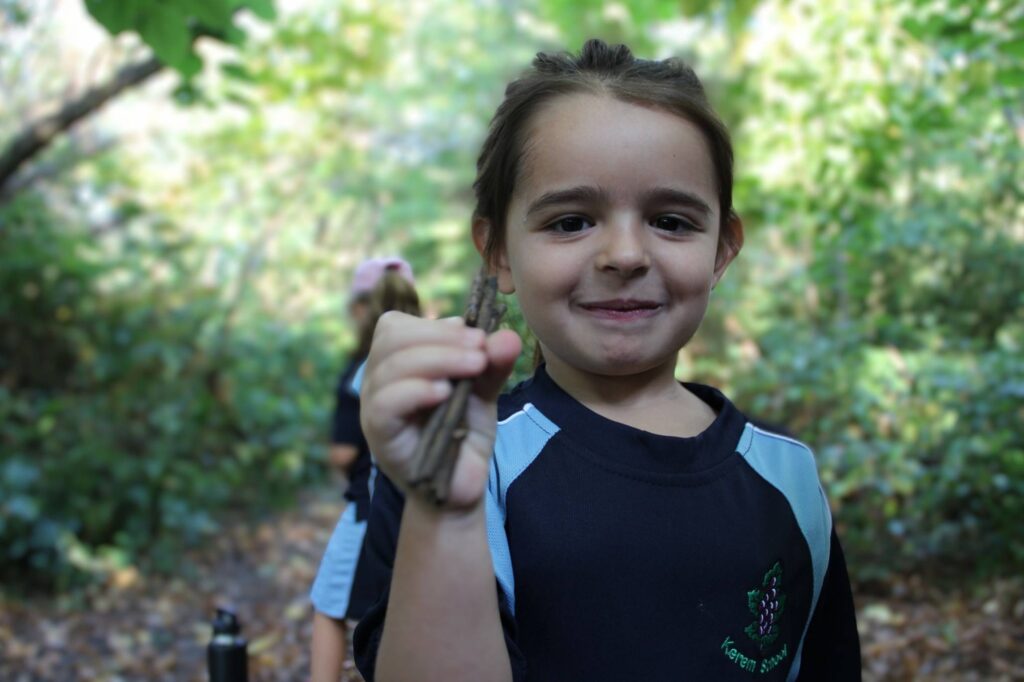
At Kerem School, Forest School forms a valued part of our curriculum, giving children regular opportunities to learn and grow in the natural environment just minutes from the school site. Rooted in child-led exploration and guided by trained practitioners, Forest School nurtures curiosity, resilience and independence through purposeful outdoor experiences.

In our nearby woodland setting, pupils take part in activities such as den building, nature identification, safe tool use, fire awareness, problem-solving challenges and environmental art. Children are encouraged to assess risk thoughtfully, work collaboratively and develop confidence in making decisions. These experiences build perseverance, teamwork and a strong sense of responsibility.

Forest School supports emotional wellbeing as well as physical development. Time outdoors helps children develop self-esteem, manage challenge and form a meaningful connection with the natural world. It also strengthens learning across the curriculum, from scientific observation and descriptive writing to measurement and spatial reasoning.

Above all, Forest School fosters a lifelong respect for nature and an understanding of sustainability. By learning beyond the classroom walls — in a setting that feels adventurous yet safely within reach — children develop confidence, creativity and a spirit of exploration that enriches their whole educational journey.

PSHE & RSE

PSHE & RSE

At Kerem School, Personal, Social, Health and Economic (PSHE) education plays a central role in nurturing confident, compassionate and resilient young people.  Our carefully structured programme ensures pupils develop the knowledge, skills and attributes they need to manage to manage friendships, challenges and responsibilities in a thoughtful and healthy way.  We are committed to equal opportunities for all and to teach the importance of valuing and respecting every individual.  We use the ‘Heads Up Kids’ programme which was developed by PAJES in partnership with Norwood.

From Nursery to Year 6, children explore themes such as recognising and regulating emotions, building positive friendships, managing conflict, developing resilience, understanding mental wellbeing and celebrating difference. Pupils learn how to resolve disagreements respectfully, how to seek help when needed and how to contribute positively to their community. These values are reinforced throughout school life — in assemblies, charity initiatives, Jewish Studies, e-safety education and across the wider curriculum.

A key outcome of the programme is that the skills pupils develop are not just confined to the classroom sessions but make an ongoing difference and impact on all areas of school life. Providing this opportunity creates a strong baseline for emotional literacy and positive mental health as well as helping to highlight those children who may require early intervention or support. The programme seeks to normalise discussion around social and emotional challenges in order to make it easier for children to speak up when they encounter difficulties.

Our RSE curriculum builds progressively in line with the age and stage of the pupils. In the younger years, children focus on kindness, caring friendships, family structures and understanding personal space. As pupils grow older, they explore respect in relationships, consent, online communication and the importance of healthy boundaries.

Throughout PSHE and RSE, our aim is to equip children not simply with information, but with strong values, emotional intelligence and the confidence to make wise, responsible choices as they grow

Assessment

At Kerem, assessment is used thoughtfully to support each child’s learning and development. Our approach ensures that teaching is responsive, personalised, and focused on progress.
Assessment helps us adapt teaching and provide targeted support where needed.  It supports the strong academic outcomes pupils achieve, while maintaining their wellbeing and love of learning.

How We Assess

  • Assessment is ongoing and teacher-led, woven naturally into everyday classroom practice
  • Teachers use observations, classwork, discussion and homework activities to understand each child’s strengths and next steps
  • We use baseline assessments on entry help us understand each child’s starting point
  • Standardised assessments are used selectively to help benchmark progress and inform teaching

Keeping Parents Informed

We believe in open, clear communication with parents.

  • Progress is shared through regular meetings and written reports
  • Teachers are always available to discuss a child’s development
  • Parents can expect honest, constructive feedback focused on progress and next steps

Visit Us

We warmly invite you to visit us and experience for yourself what makes Kerem such a wonderful play to learn and grow!
Book a Visit